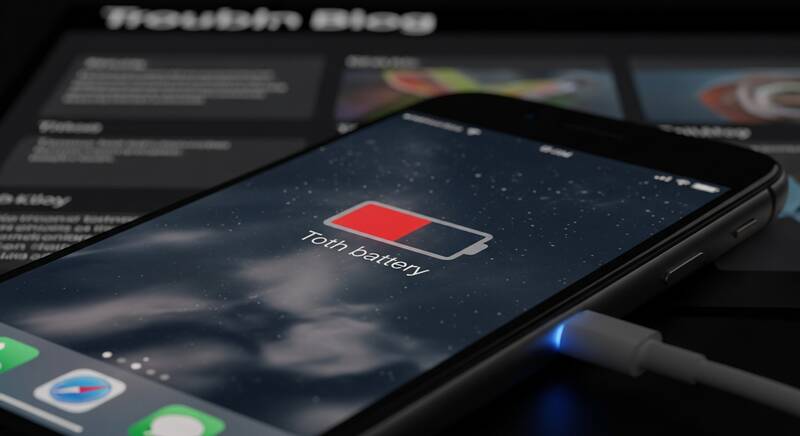
Is your iPhone not charging when you plug it in? This is one of the most common iPhone problems that millions of users face every day. Whether your iPhone shows no charging indicator, charges slowly, or stops charging at a certain percentage — don't panic! In most cases, you can fix it yourself without visiting an Apple Store.
In this comprehensive guide, we'll walk you through 10 proven solutions to fix iPhone not charging problem. These methods work for all iPhone models including iPhone 15, 14, 13, 12, SE, and older models.

Why Is My iPhone Not Charging?
Before jumping into solutions, let's understand the common reasons why your iPhone won't charge:
- Dirty or damaged charging port — Dust, lint, and debris blocking the connection
- Faulty charging cable — Frayed, broken, or non-MFi certified cables
- Bad power adapter — Damaged or incompatible charger
- Software glitches — iOS bugs preventing charging
- Battery health issues — Degraded battery needing replacement
- Overheating — iPhone stops charging when too hot
- Water damage — Moisture in the Lightning or USB-C port
Solution 1: Clean Your iPhone Charging Port
The most common reason for iPhone not charging is a dirty charging port. Over time, pocket lint, dust, and debris accumulate inside the port and prevent proper contact with the charging cable.
How to Clean iPhone Charging Port Safely:
- Power off your iPhone completely
- Use a wooden or plastic toothpick (never use metal objects)
- Gently scrape out any lint or debris from the port
- Use a can of compressed air to blow out remaining particles
- Shine a flashlight into the port to check if it's clean
- Try charging your iPhone again
Important: Never use metal objects like pins or needles as they can damage the charging contacts inside the port.
Solution 2: Try a Different Charging Cable
Charging cables wear out over time, especially near the connector ends. Even if your cable looks fine on the outside, the internal wires may be damaged.
- Borrow a known working cable from someone else
- Make sure it's an Apple-certified (MFi) cable
- Check for any fraying, bending, or discoloration on your current cable
- If your iPhone charges with a different cable, replace your old one
Solution 3: Use a Different Power Adapter
Sometimes the problem is with the power adapter, not the cable or iPhone. Try these steps:
- Try a different Apple power adapter
- Plug your cable directly into a computer USB port
- Try a different wall outlet
- Avoid using cheap third-party adapters that may not provide proper voltage
Solution 4: Force Restart Your iPhone
A software glitch can sometimes prevent your iPhone from charging. A force restart can fix this without erasing any data:
For iPhone 8, X, 11, 12, 13, 14, 15 and later:
- Quickly press and release the Volume Up button
- Quickly press and release the Volume Down button
- Press and hold the Side button until you see the Apple logo
- Release the button and wait for iPhone to restart
For iPhone 7 / 7 Plus:
- Press and hold both Volume Down + Side button simultaneously
- Hold until the Apple logo appears, then release
Solution 5: Update iOS to Latest Version
Apple regularly releases iOS updates that fix charging-related bugs. Make sure your iPhone is running the latest iOS version:
- Go to Settings → General → Software Update
- If an update is available, tap Download and Install
- Make sure you have at least 50% battery or connect to a charger during update
Solution 6: Check for Liquid in Charging Port
If you see a "Liquid Detected in Lightning/USB-C Connector" alert, your iPhone has detected moisture in the charging port:
- Do NOT charge your iPhone until the port is completely dry
- Tap the phone gently with the port facing down to remove water
- Leave your iPhone in a dry, well-ventilated area
- Wait at least 30 minutes to several hours before trying again
- Do NOT use rice — it can push starch particles into the port
- Do NOT use a hair dryer — heat can damage internal components
Solution 7: Check Battery Health
If your iPhone battery has degraded significantly, it may cause charging issues:
- Go to Settings → Battery → Battery Health & Charging
- Check your Maximum Capacity percentage
- If it's below 80%, your battery may need replacement
- Check if Peak Performance Capability shows any messages
Solution 8: Disable Optimized Battery Charging
Apple's Optimized Battery Charging feature may delay charging to preserve battery health. Try disabling it temporarily:
- Go to Settings → Battery → Battery Health & Charging
- Toggle off Optimized Battery Charging
- Try charging your iPhone again
Solution 9: Reset All Settings
If nothing else works, try resetting all settings. This won't delete your data but will reset system preferences:
- Go to Settings → General → Transfer or Reset iPhone
- Tap Reset → Reset All Settings
- Enter your passcode and confirm
- Your iPhone will restart with default settings
Solution 10: Try Wireless Charging
If your iPhone supports wireless charging (iPhone 8 and later), try using a Qi-compatible wireless charger:
- Place your iPhone on a wireless charging pad
- Make sure there's no thick case or metal objects between the phone and charger
- If wireless charging works but wired doesn't, the charging port likely needs repair
When to Visit Apple Store
If none of the above solutions work, it's time to get professional help:
- Your iPhone is still under warranty (check at checkcoverage.apple.com)
- The charging port is physically damaged
- Your iPhone shows signs of swelling (bulging battery)
- Battery health is below 80%
Frequently Asked Questions
Why does my iPhone charge slowly?
Slow charging can be caused by using a low-wattage adapter, a damaged cable, background apps consuming power, or a degraded battery. Use at least a 20W USB-C adapter for fast charging on iPhone 8 and later.
Can I use my iPhone while charging?
Yes, but heavy usage like gaming or video streaming while charging can cause overheating and slow down the charging process. For best results, avoid heavy use while charging.
How long does iPhone battery last?
An iPhone battery is designed to retain up to 80% of its original capacity after 500 complete charge cycles. This typically lasts about 2-3 years of normal use.
Conclusion
An iPhone not charging can be frustrating, but in most cases, it's a simple fix. Start with cleaning the charging port and trying a different cable — these two solutions fix the problem for over 70% of users. If the issue persists, work through the remaining solutions in this guide.
Remember to always use Apple-certified accessories and keep your iOS updated to prevent future charging problems. If you found this guide helpful, share it with others who might be facing the same issue!